

Francisco Sancho
Desarrollo Sostenible
In this article, we explore The Road to Sustainable Development to explain why we are inspired by a mission to promote reflection and understanding of the ways in which we can all contribute to progress in balance between society, the environment, and productive activities. Secondly, we will examine how sustainable development has been the approach adopted especially by the United Nations (UN). We will also review how the term and its pillars emerged, as well as how its principles and objectives, which are still fully valid, have evolved to the present day.
As we have come to understand how the planet works, we have discovered that we inhabit a living planet, because within it, similar to blood in the veins, a set of relationships between all the organisms and elements that constitute it flow. We are part of a biosphere with a set of interdependent systems that, over the years, have achieved a sufficient balance to allow the coexistence and adaptation of diverse species to their surrounding environment.
Unfortunately, for many years, human beings have been blinded by a very anthropic view of the planet. That is, we have been driven by a vision centered on human beings themselves, where we have understood all other natural systems as serving the human system of organization, that is, society. And especially as serving the part of society oriented toward the satisfaction of material needs, such as productive and economic activity in general.
We have all come to recognize the results. We have subjected natural systems to excessive exploitation, even overexploitation, using renewable resources beyond the level that allows their natural regeneration, or to levels of depletion in the case of nonrenewable resources. In other words, we have been observing a development of society that cannot be sustainable, because it threatens the sufficiency and subsistence of the species and the resources on which it has based its development.
The challenge facing sustainable development is that it demands a redefinition of our lifestyles, one in which we consider long-term needs and in which our production and consumption decisions incorporate social and environmental costs alongside economic ones. This should be seen as the pursuit not only of the economic return on our activities, but also of the return on natural capital and, above all, human capital, understood as personal development, within an inclusive, collaborative model, with greater participation of communities and individuals in progress. This, friends, implies a redefinition of how we see ourselves and how we act, and like all changes in our habits and customs, what we find in our society is primarily a natural resistance to the required change. We believe, therefore, that better information and dissemination of small and large actions that contribute to sustainable development is a way to jointly find a better path forward.
When we look for traces of the incorporation of environmental issues into reflections on development, we find that the environment, as a component of sustainable development, has only been considered for a few decades. In 1962, Rachel Carson’s book Silent Spring marks the milestone as a publication that influenced the understanding of environmental pollution, referring to the use of insecticides, herbicides, and fungicides (Rachel Carson, 1962). Later, in 1968, Garret Hardin published Tragedy of the Commons, in which he points out that Adam Smith’s economic theory of the invisible hand, which postulates that the pursuit of individual interests leads to collective well-being, is not necessarily true in a world of common goods where individuals try to supersede their interests over those of the community (Garret Hardin, 1968).
But it was in the 1970s when concern for the environment took on global dimensions, which was expressed in the report Limits to Growth published in 1972 by what was called the Club of Rome. This club originated when a group of scientists, educators, economists, humanists, businessmen and representatives of civil society gathered at an academy in Rome to discuss the present and future of human beings in areas such as technology, population, food, natural resources and the environment. This publication established that economic and demographic growth, if they continued at that time, would exceed their sustainable levels, in turn reducing the capacity of the environment and causing a decline in growth.

The declaration introduces 25 principles, and analyzing some of them, we find that in relation to sustainability, it establishes that:
- Natural resources must be preserved.
- For non-renewable resources, the danger of depletion must be avoided.
- Pollution must not exceed the environment’s capacity to neutralize it.
These principles link development with the environment by proclaiming that:
- Development is indispensable for environmental conditions.
- Environmental policies must not affect the development process.
This last point is best understood in conjunction with the next two principles, which indicate:
- The need for integrated environmental planning.
- The resolution of conflicts between development and the environment.
Regarding the role of education and scientific and technological advancement, three principles are incorporated that dictate that:
- It is essential to provide environmental education.
- Science and technology must be used to improve the environment.
- Encourage research into environmental problems.
During the 1970s, other multilateral environmental agreements were created, which shaped the vision of a more sustainable world. One of these was the Ramsar Convention on Wetlands of International Importance in 1971, which ensures the protection of water, food production capacity and biodiversity in wetlands. The mission of the RAMSAR Convention is “the conservation and wise use of wetlands through local and national action and international cooperation, as a contribution to achieving sustainable development” (Ramsar, 1971). Another important agreement is the Convention concerning the Protection of the World Cultural and Natural Heritage in 1972, organized by UNESCO, which proclaims that countries have “the obligation to identify, protect, conserve, rehabilitate and transmit to future generations the cultural and natural heritage located within their territory” (UNESCO, 1972). The Convention on International Trade in Endangered Species of Wild Fauna and Flora was enacted in 1973 and seeks to regulate international trade in “species in danger of extinction or that are or may be affected by trade” (CITIES, 1973). Finally, in 1979, the Convention on the Conservation of Migratory Species of Wild Animals was agreed upon, which “has as its objective the conservation of terrestrial, aquatic, and avian migratory species throughout their range” (CMS, 1979).
The publication World Conservation Strategy was prepared by the International Union for Conservation of Nature (IUCN), with support from UNEP and the World Wildlife Fund (WWF), and “was the first document to incorporate the phrase sustainable development,” which has permeated “mainstream development thinking” and “conservation and development practices worldwide.” This publication analyzes the interdependence of humanity and nature, and proclaims that this relationship “has no future unless nature and natural resources are protected.” (IUCN, 2012).
In 1982, the United Nations General Assembly promoted the publication of The Earth Charter as a declaration recognizing “that amid the magnificent diversity of cultures and ways of life, we are one human family and one Earth community with a common destiny.” However, “dominant patterns of production and consumption are causing environmental devastation, resource depletion, and mass extinction of species.” Therefore, “fundamental changes in our values, institutions, and ways of life are needed,” given that “all beings are interdependent and all life, regardless of its usefulness, has value to human beings.” (Earth Charter, 1982).
The Earth Charter is a declaration of fundamental ethical principles for a sustainable way of life. These principles have been revised since the year of its publication by the Earth Charter Commission. They currently proclaim their principles in four main areas:
Respect and care for the community of life
Ecological integrity
Social and economic justice
Democracy, nonviolence, and peace
The work of the World Commission on Environment and Development (known as the Brundtland Commission, after being led by former Swedish Prime Minister Gro Harlem Brundtland) resulted in the publication of the report Our Common Future in 1987 and offers the first and best-known definition of sustainable development, which is “development that meets the needs of the present generation without compromising the ability of future generations to meet their own needs.” (Brundtland Commission, 1987).
Our Common Future analyzes development within the following areas: Population and human resources, Species and ecosystems, Energy, Industry, and the urban challenge. According to this report, the sustainable development strategy involves addressing objectives such as more equitable growth; the satisfaction of essential needs such as work, food, energy, water, and hygiene; controlling population growth; the sustainability of resources; the reorientation of technologies; and the joint consideration of environmental and economic needs in decision-making.
Our Common Future recognizes that sustainable development is a path we can only follow if the required changes occur in economic, social, and political structures, both at the societal and individual levels—that is, at the level of each of us.
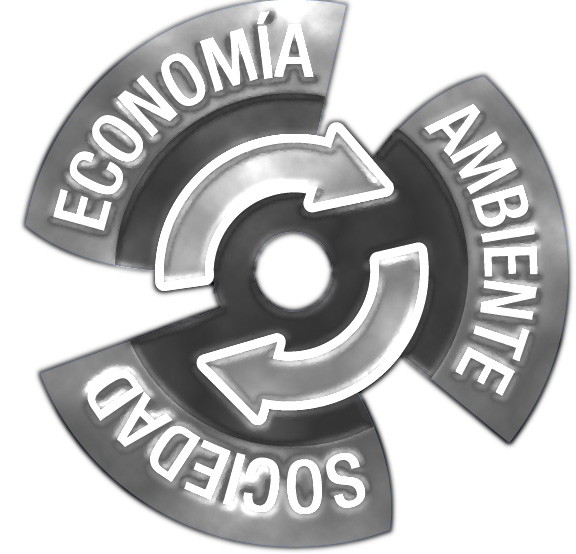
In 1992, the United Nations Conference on Environment and Development, commonly known as the Rio Summit or Earth Summit, was held. At this summit, 172 heads of state ratified the principles of sustainable development, now grouped into 27 principles. Furthermore, the Rio Summit produced Agenda 21, a plan for promoting sustainable development. This Earth Summit expanded the Brundtland Report’s original definition of sustainable development by establishing its three pillars: economic development, social development, and environmental protection. (UN, 1992)
Ban Ki-moon, Secretary-General of the United Nations, offers an even broader concept of sustainable development, stating that “its objective is to unite not only the three aspects—economic, social, and environmental—but also developed and developing countries, governments, businesses and civil society, scientific knowledge and public policies, cities and rural areas, and present and future generations.” (UN, 2010)
The 2002 UN World Summit on Sustainable Development reviewed progress since Rio and reaffirmed the persistence of problems such as growing poverty and disparity between rich and poor, unsustainable production and consumption patterns, and the deterioration of nature through aspects such as biodiversity loss, desertification, climate change, natural disasters, and air, water, and tidal pollution. (UN, 2002)
In 2012, the United Nations Conference on Sustainable Development, Rio+20, was held as a 20-year review of the Earth Summit. This new conference focused on two main themes: “how to build a green economy to achieve sustainable development and poverty eradication, and how to improve international coordination for sustainable development.” The outcome of the summit was a resolution entitled The Future We Want, which reaffirms the commitment to “an economically, socially, and environmentally sustainable future for our planet and for present and future generations.” (UN, 2012)
Regarding the sustainable development goals, let’s go back in time to remember the 2000 UN agreement establishing the Millennium Development Goals. These goals offer a perspective on the areas where development needed to be strengthened at that time, giving rise to eight goals related to the fight against poverty, universal primary education, child and maternal health, equality, and environmental sustainability, among others (UN, 2000).
The importance of understanding the origin of the Millennium Development Goals is that their review at the 2015 Summit for Sustainable Development gave rise to the so-called 2030 Agenda for Sustainable Development, which now establishes 17 Sustainable Development Goals (also known as global goals) whose purpose, among other things, is to end poverty, combat inequality and injustice, strengthen health and sanitation, promote responsible production and consumption, renewable energy, sustainable cities, marine and terrestrial ecosystems, and address climate change. (UN, 2015)
The 2030 Agenda offers a “highly ambitious and transformative vision” of a world without poverty, hunger, disease, or deprivation, where all forms of life can thrive; a world free from fear and violence; a world where literacy is universal, with equitable and universal access to quality education at all levels, healthcare, and social protection, and where physical, mental, and social well-being is guaranteed; a world where we reaffirm our commitments to the human right to safe drinking water and sanitation, where there is improved hygiene, and food is sufficient, safe, affordable, and nutritious; a world whose habitats are safe, resilient, and sustainable, and where there is universal access to an affordable, reliable, and sustainable energy supply.” (UN, 2015)
The 2030 Agenda, therefore, points out that there are many areas in which we still need to focus and address, given the ongoing challenges that gave rise to the sustainable development approach and the need for balanced economic, social, and environmental progress.
We conclude this review of the topic of sustainable development with a quote from Ban Ki-moon: “The future is in our hands. Together, we must ensure that our grandchildren will not have to ask us why we failed to do the right thing, leaving them to suffer the consequences.” (Ban Ki-moon, 2007)
References:
Rachel Carson, 1962. Silent Spring. FAWCETT PUBLICATIONS, INC., GREENWICH, CONN.
Garrett Hardin, 1968. The Tragedy of the Commons. Science, New Series, Vol. 162, No. 3859
Meadows, Donella et al., 1972. The Limits to Growth. Report of the Club of Rome. Potomac Associates Books. New York.
UN, 1972. Declaration of the United Nations Conference on the Human Environment.
Ramsar, 1971. http://www.ramsar.org/
UNESCO, 1972. General Conference of the United Nations Educational, Scientific and Cultural Organization, Paris. http://portal.unesco.org/es/ev.php-URL_ID=13055&URL_DO=DO_TOPIC&URL_SECTION=201.html
CITIES, 1973. Convention on International Trade in Endangered Species of Wild Fauna and Flora. https://cites.org/esp/disc/text.php
CMS, 1979. Convention on Migratory Species. http://www.cms.int/es
IUCN, 2012. An analysis of the impact of IUCN resolutions on international conservation efforts. World Conservation Congress, Jeju 2012.
Earth Charter, 1982. www.cartadelatierra.org
Brundtland Commission, 1987. Our Common Future. Report A/42/427 of the World Commission on Environment and Development.
UN, 1992. Agenda 21. http://web.archive.org/web/20090420073232/http://www.un.org/esa/sustdev/documents/agenda21/spanish/agenda21sptoc.htm and see http://www.un.org/es/ga/president/65/issues/sustdev.shtml
UN, 2010. Progress made so far and remaining gaps in the implementation of the outcomes of major summits in the field of sustainable development and analysis of the themes of the Conference.
UN, 2002. Report of the 2002 World Summit on Sustainable Development.
UN, 2000. Millennium Declaration. Resolution 55/2 adopted by the General Assembly.
UN, 2012. The Future We Want. Resolution 66/288 adopted by the General Assembly.
UN, 2015. Transforming our world: the 2030 Agenda for Sustainable Development.
Ban Ki-moon, 2007. http://www.unesco.org/new/es/education/themes/leading-the-international-agenda/education-for-sustainable-development/sustainable-development/